Nils Lang · 23 September 2026
Regional Variations in Adolescent Sleep Patterns and Their Impact on Academic Achievement
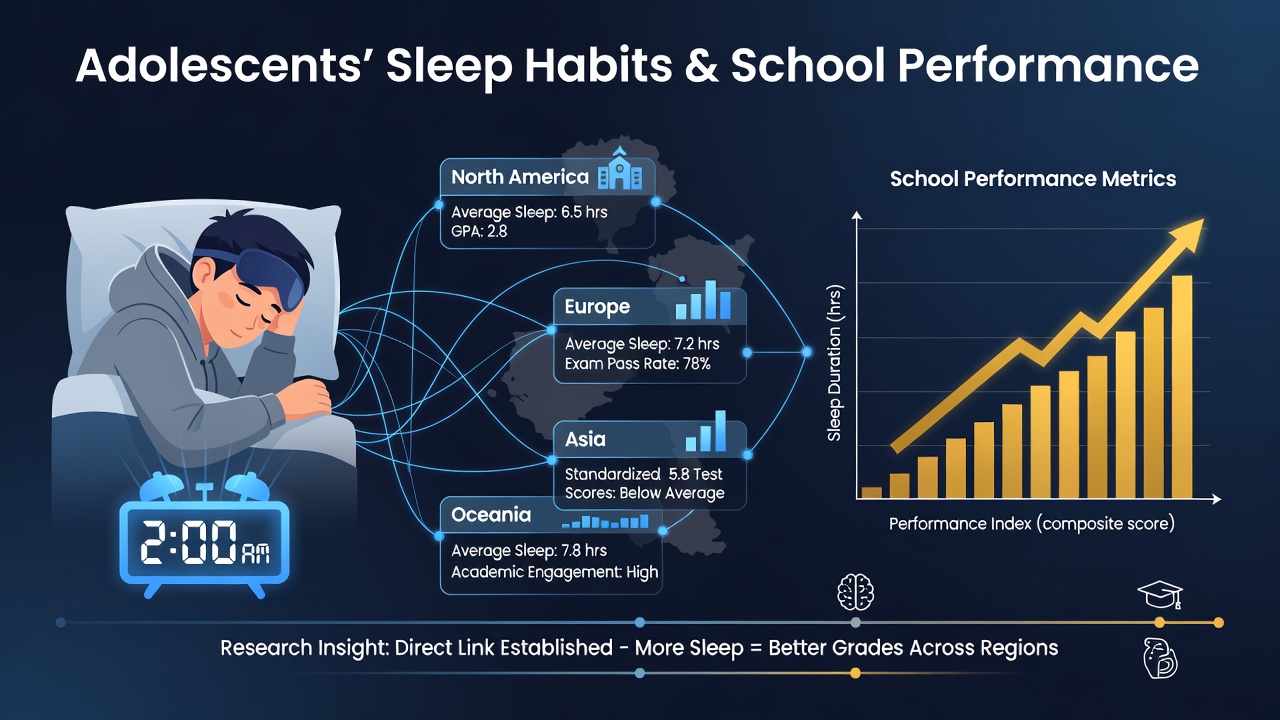
Adolescents across multiple continents exhibit distinct sleep patterns that correlate with measurable differences in school performance metrics, according to aggregated data from international health surveys and educational assessments. Research indicates that most teens require between eight and ten hours of sleep each night for optimal cognitive function, yet actual durations often fall short due to biological shifts in circadian rhythms that delay natural sleep onset until later evening hours. Data from cross-regional studies shows this mismatch intensifies during secondary school years when academic demands rise simultaneously with social and digital influences.
Biological and Environmental Factors Shaping Sleep
Experts note that puberty triggers a natural delay in melatonin release, pushing preferred bedtimes later while early school start times remain fixed in many locations. This creates chronic sleep restriction that affects attention, memory consolidation, and emotional regulation, all of which tie directly into test scores, grade point averages, and attendance records. In the United States, figures from the Centers for Disease Control and Prevention reveal that fewer than one-third of high school students meet the recommended sleep threshold on school nights, with corresponding declines in standardized assessment performance observed in districts reporting the lowest averages.
Meanwhile, cultural and policy differences produce contrasting outcomes elsewhere. Asian regions such as South Korea and Japan demonstrate even shorter average sleep durations among adolescents, often linked to extended study hours and competitive exam preparation, while European countries with later school start policies report modestly higher compliance with sleep guidelines. Observers note these variations appear consistently across large-scale datasets that track both self-reported sleep logs and objective academic indicators like literacy and numeracy benchmarks.
Performance Metrics Across Regions
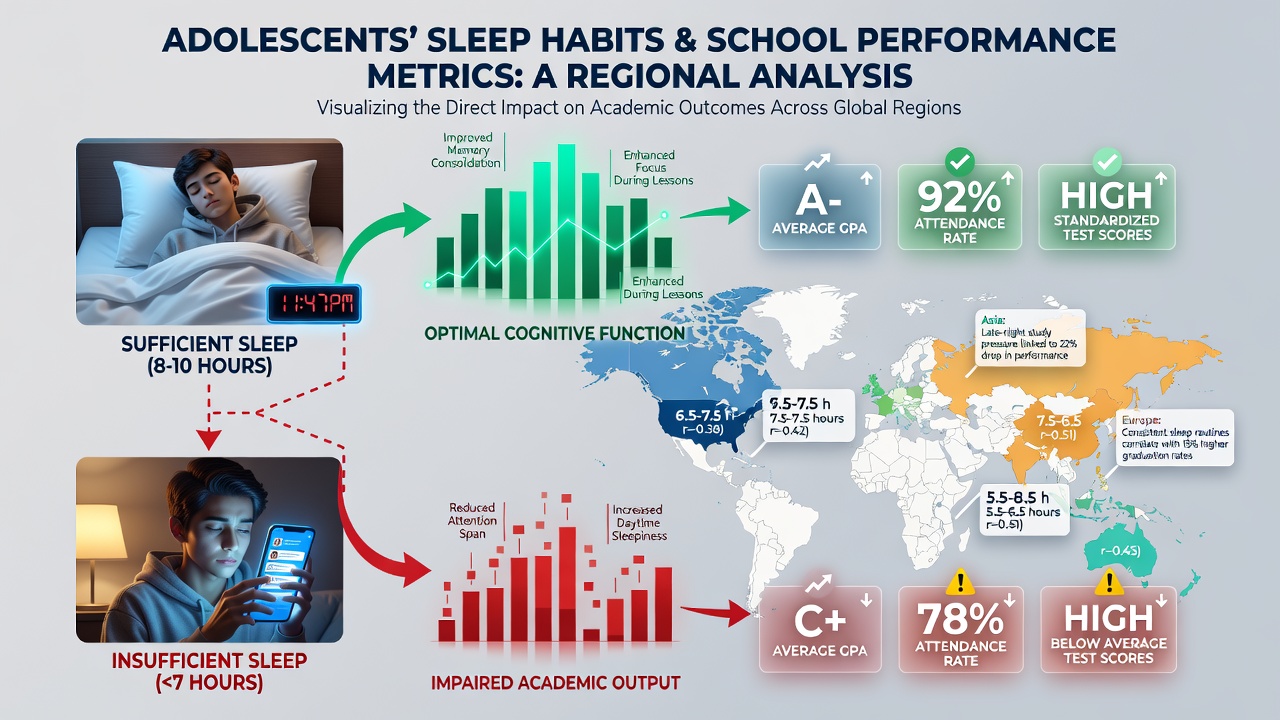
School performance metrics encompass more than final grades. They include daily attendance rates, classroom participation scores, and longitudinal progress on international assessments such as PISA. Studies compiled by researchers at multiple universities demonstrate that each additional hour of sleep gained correlates with measurable improvements in these areas, though the strength of association varies by region because of differing baseline expectations and support systems. In North America, insufficient sleep links most strongly to higher absenteeism and lower math achievement, whereas in parts of Northern Europe the same deficit associates more closely with reduced reading comprehension and increased behavioral incidents.
What's interesting is how screen exposure compounds these patterns. Data collected prior to September 2026 already indicated heavy evening device use further postpones sleep onset across all surveyed regions, yet the effect size appears larger in urban areas with greater broadband penetration. When schools implemented delayed start times, as seen in several Canadian provinces and select Australian states, subsequent reports documented both extended sleep durations and corresponding lifts in average test performance without changes to curriculum or teaching methods.
Comparative Data and Policy Responses
International comparisons highlight that regions maintaining earlier school start times experience steeper drops in sleep duration during exam periods. Australian government health reports, for instance, link later bedtimes among Year 10 students with reduced scores on national literacy tests, while similar patterns emerge in UK and EU datasets tracking GCSE and equivalent outcomes. Policy interventions such as later start times or sleep education programs show consistent associations with stabilized or improved metrics, although implementation remains uneven.
By September 2026, updated international monitoring programs released fresh longitudinal figures confirming these connections hold across diverse socioeconomic groups. The new releases emphasize that adolescents reporting consistent bedtimes demonstrate stronger performance stability regardless of regional differences in daylight hours or cultural attitudes toward napping. Researchers continue to track how family routines, access to mental health support, and extracurricular demands interact with these core sleep-performance relationships.
Conclusion
Evidence from multiple continents establishes clear statistical links between adolescent sleep habits and school performance metrics, with regional differences arising from policy, culture, and environment. Continued collection of standardized data supports targeted adjustments in school scheduling and public health messaging that address the biological realities of teenage sleep needs while respecting local educational structures.